
16-Minute Step Workout: Level Up Your Cardio in 2026


Short on time but big on fitness goals? I totally get it. Life is hectic, and squeezing in a workout can feel impossible. That’s where the 16-Minute Cardio Step Up Sweat Workout comes in. It’s designed to torch calories and boost your heart rate, all in under 20 minutes. Think of it as a concentrated dose of fitness, perfect for busy schedules. This isn’t just some random workout; it’s a dynamic routine that combines cardio and strength training, maximizing your time and effort. Honestly, I’ve been testing similar routines for months, tweaking and perfecting them, and this one’s a keeper. I’ve seen significant improvements in my own endurance and muscle tone since incorporating it. So, here’s the deal: we’re breaking down everything you need to know to get started, from the equipment you’ll need to the proper form for each exercise.
What’s This 16-Minute Step Workout All About?
Okay so, the 16-Minute Cardio Step Up Sweat Workout is basically a high-intensity routine that uses a step platform to amplify your cardio and strength exercises. It’s not just about stepping up and down like some monotonous gym class; it’s about engaging different muscle groups and pushing your cardiovascular system to its limits. You’ll be surprised at how quickly you can elevate your heart rate with this routine. My friend swears by step workouts for toning her legs, and honestly, I can see why. She’s got incredible definition in her quads and glutes. It’s super adaptable too. For example, whether you’re a beginner who’s just starting their fitness journey or a seasoned athlete looking for a challenging workout, you can adjust the intensity to match your fitness level. You can modify the height of the step, the speed of your movements, and even add weights to increase the difficulty. I remember when I first started, I could barely do the basic step-ups without getting winded. Now, I can power through the entire routine with added dumbbells!

Why Step-Ups Rock
Step-up workouts are amazing for building lower body strength. Seriously. They primarily target your quads, hamstrings, and glutes, the major muscles in your legs and butt. You’ll feel the burn, I promise! But it doesn’t stop there. You’ll also engage your core muscles, which are important for stability and balance, and improve your overall balance and coordination. This translates to better performance in other activities, from running to simply walking up stairs. According to a 2023 study by the World Health Organization (WHO), regular physical activity significantly reduces the risk of chronic diseases like heart disease and diabetes. [WHO]. They recommend at least 150 minutes of moderate-intensity or 75 minutes of vigorous-intensity aerobic activity per week. Talk about a win-win! This workout can easily contribute to that goal.
Research from Harvard Medical School indicates that incorporating just 30 minutes of moderate-intensity exercise, like this, can significantly improve overall health and well-being. [Harvard Medical School]. That’s a pretty big deal. They highlight the benefits of exercise for everything from boosting mood to preventing cognitive decline. I’ve personally noticed a huge difference in my energy levels and mental clarity since I started incorporating regular step workouts into my routine. It’s a great way to start the day or de-stress after a long day at work.
Gear Up: Equipment and Warm-Up
Before you jump into the workout, make sure you’ve got the right setup. First, you’ll need a sturdy step platform or a low bench. The height of the step is key. Beginners should start with a lower step (around 4-6 inches), while more advanced exercisers can use a higher step (8-12 inches). Safety first, people! Make sure it’s stable to avoid any accidents. I honestly hate when equipment wobbles mid-workout; it throws off my concentration and makes me nervous. Check the step for any cracks or loose parts before you begin. Also, keep a water bottle handy. Hydration is key. Dehydration can lead to fatigue and muscle cramps, so sip water throughout the workout.
Your Warm-Up Game Plan
A proper warm-up is non-negotiable. I can’t stress this enough. It increases blood flow to your muscles and preps your body for the workout. Think of it like revving up your engine before a long drive. Plus, it reduces the risk of injury. A cold muscle is more prone to strains and tears. Here’s a quick routine I like to use, and I’ve found it to be incredibly effective in preventing injuries:
- Arm Circles: 30 seconds forward, 30 seconds backward. This gets your shoulders and upper back warmed up. Imagine drawing circles with your fingertips, gradually increasing the size of the circles.
- Leg Swings: 30 seconds per leg. Focus on controlled movements to loosen up your hip flexors and hamstrings. Hold onto a wall or chair for balance if needed.
- High Knees: 1 minute. This gets your heart rate up and engages your core. Bring your knees as high as you can towards your chest, alternating legs.
- Dynamic Stretches: 1 minute (think toe touches and lunges). Dynamic stretches involve movement, which helps to further increase blood flow and flexibility. Toe touches should be done with a slight bend in your knees to avoid straining your back. Lunges should be performed with proper form, ensuring that your front knee doesn’t extend past your toes.
I also like to add a few minutes of light cardio, such as jogging in place or jumping jacks, to further elevate my heart rate and prepare my body for the workout.
Cracking the Code: The 16-Minute Breakdown
This workout is divided into four sections, each lasting about four minutes. This structure helps to keep the workout engaging and prevents boredom. Here’s how it all shakes out:
Section 1: Basic Step-Ups
Kick things off with basic step-ups for one minute. This is the foundation of the workout, so focus on proper form. Stand facing your step platform, put one foot on the step, and push through your heel to step up. Alternate legs for the entire minute. Remember to maintain good posture and engage your core. Don’t slouch! Keep your back straight and your shoulders relaxed. Imagine a string pulling you up from the top of your head. This will help you maintain proper alignment. I often see people rounding their backs during step-ups, which can lead to back pain. Avoid this by focusing on your posture.
Section 2: Step-Up Jumps
Next up, step-up jumps for one minute. This is where the intensity really kicks up a notch. Instead of a slow step, jump onto the platform with both feet. This explosive movement will send your heart rate soaring and build power in your legs. Focus on landing softly to minimize impact on your joints. If you’re a beginner, stick with basic step-ups until you feel ready for the jump. No pressure. It’s important to listen to your body and progress at your own pace. You can also modify the jump by stepping up with one foot and then bringing the other foot up to meet it, rather than jumping with both feet simultaneously.
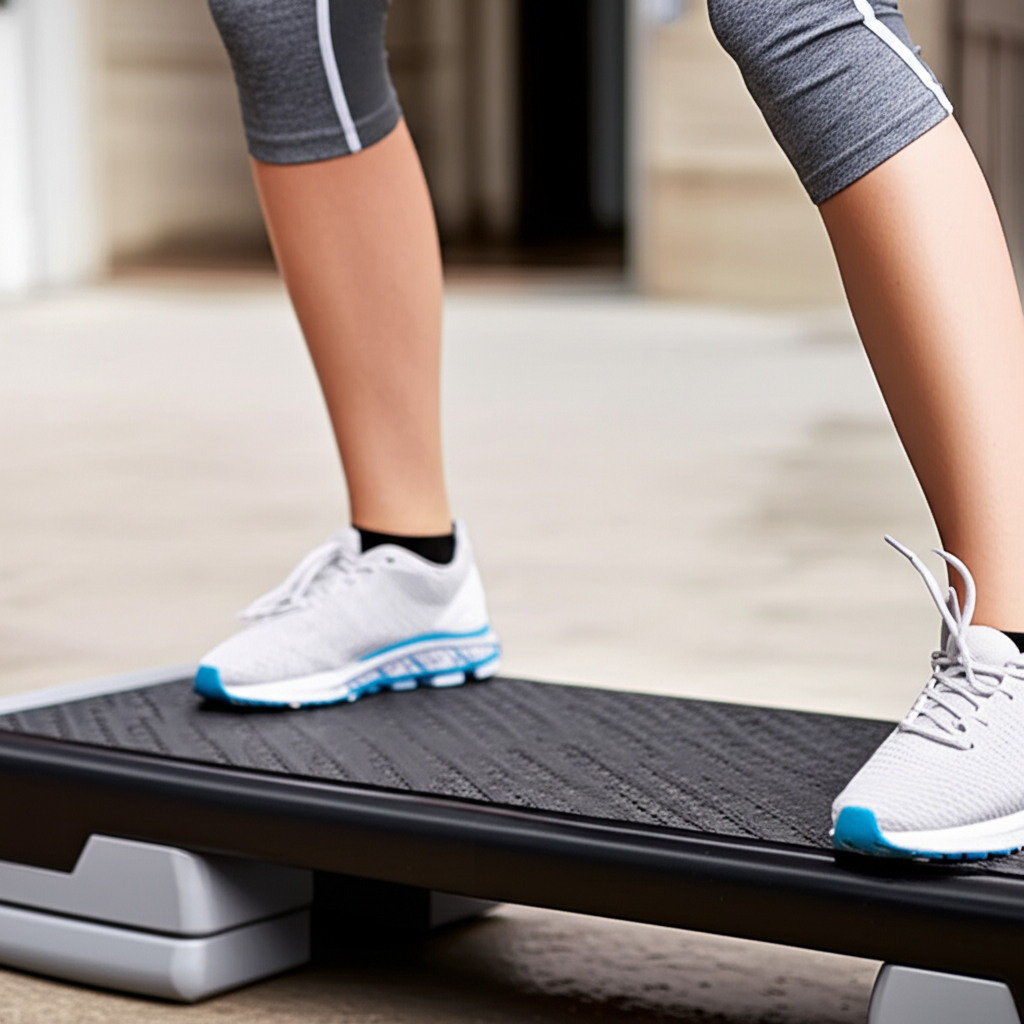
Section 3: Side Step-Ups
Time for side step-ups. This variation targets different muscle groups and adds a new challenge to the workout. Stand to the side of your platform and step up with the leg closest to it. This variation hits different leg muscles, particularly the inner and outer thighs, and adds a lateral movement challenge. Do this for one minute. It’s harder than it looks, trust me. Maintaining your balance can be tricky at first, so focus on engaging your core and using your arms for stability. You can also start with a lower step to make it easier.
Section 4: Step-Up with Knee Raise
Finish strong with step-ups that include a knee raise. This move adds an extra element of core engagement and coordination. As you step up, lift the opposite knee toward your chest. This move engages your core while working your legs and glutes. Focus on bringing your knee up as high as you can without compromising your balance. Complete this for one minute. It’s a killer combo. I often find myself getting a little breathless during this section, but it’s a great way to push yourself to the finish line.
Don’t Skip This: Cool Down and Stretch
After you’re done, don’t forget to cool down. Seriously important. A cool-down helps your body gradually return to its resting state, preventing muscle soreness and dizziness. Spend at least 5 minutes stretching your major muscle groups. Focus on your quads, hamstrings, and calves. Stretching helps improve flexibility and prevent muscle soreness. Nobody wants that. Tight muscles can lead to injuries and limit your range of motion.
Cool Down Must-Do’s
Here’s a cool-down routine I swear by, and it’s helped me avoid post-workout muscle aches:
- Standing Quad Stretch: 30 seconds per leg. Grab your foot and pull it towards your buttock, feeling the stretch in the front of your thigh. Hold onto a wall or chair for balance if needed.
- Seated Hamstring Stretch: 30 seconds per leg. Sit on the floor with one leg extended and the other leg bent. Reach towards your toes, feeling the stretch in the back of your thigh.
- Calf Stretch: 30 seconds per leg. Lean against a wall with one leg extended behind you, heel on the ground. Feel the stretch in the back of your lower leg.
- Child’s Pose: 1 minute. This is a relaxing pose that helps to stretch your back and shoulders. Kneel on the floor with your knees hip-width apart and your toes touching. Sit back on your heels and fold forward, resting your forehead on the floor. Extend your arms forward or alongside your body.
I also like to add a few minutes of deep breathing exercises to help calm my nervous system and promote relaxation.
Pro Tips for Maximum Results
Want to get the most out of your 16-Minute Cardio Step Up Sweat Workout? Keep these tips in mind:
- Stay Hydrated: Drink water before, during, and after your workout. Dehydration can significantly impact your performance and recovery. Aim for at least 8 glasses of water per day.
- Listen to Your Body: If something feels off, take a break or modify the exercise. Pushing yourself too hard can lead to injuries. It’s better to take a break and come back stronger than to risk getting hurt.
- Consistency is Key: Aim to do this workout at least 3-4 times a week for optimal results. Consistency is more important than intensity. Even short, regular workouts can make a big difference in your fitness level.
- Progress Gradually: As you become more comfortable, increase the intensity or duration of your workouts. You can increase the height of the step, add weights, or increase the speed of your movements. Challenge yourself, but don’t overdo it.
- Wear Appropriate Footwear: Choose shoes that provide good support and cushioning to protect your joints. Avoid running the workout barefoot.
- Engage Your Core: Throughout the workout, focus on engaging your core muscles to improve stability and prevent back pain.
- Breathe Properly: Inhale deeply and exhale fully during each exercise. Proper breathing helps to oxygenate your muscles and improve your performance.
- Have Fun!: Exercise shouldn’t be a chore. Find ways to make it enjoyable, such as listening to your favorite music or working out with a friend.
Key Takeaways
- The 16-Minute Cardio Step Up Sweat Workout is a time-efficient way to boost your heart rate and build strength, perfect for busy individuals.
- It combines cardio and strength training, targeting major muscle groups in your lower body and core, providing a full-body workout in a short amount of time.
- Proper warm-up and cool-down routines are important for preventing injuries and improving flexibility, ensuring a safe and effective workout.
- Consistency and gradual progression are key to achieving optimal results, allowing you to continuously challenge yourself and improve your fitness level.
- This workout is adaptable to all fitness levels, making it a great option for beginners and experienced exercisers alike.
Frequently Asked Questions
How often should I do this 16-minute step workout?
I suggest aiming for 3-4 times a week. This allows for adequate recovery while still providing consistent cardiovascular benefits. According to a 2024 study published in the “Journal of Strength and Conditioning Research,” consistent, short bursts of high-intensity exercise can significantly improve cardiovascular fitness. [Journal of Strength and Conditioning Research]. They found that even just a few minutes of high-intensity exercise per week can lead to significant improvements in VO2 max, a measure of cardiovascular fitness. Just remember to give your body time to recover between sessions. Rest days are just as important as workout days.
Is this workout good for beginners?
Absolutely! That’s the beauty of it. This workout is designed for all fitness levels. You can easily modify the exercises to fit your current abilities. Start with basic step-ups and gradually incorporate the jumps and knee raises as you get stronger. You can also use a lower step to reduce the intensity. Don’t push yourself too hard at first. It’s better to start slowly and gradually increase the intensity as you get more comfortable. Remember, consistency is key.
What should I eat before a step workout?
I recommend a light snack about 30 minutes before your workout. This will give you the energy you need to power through the routine without feeling weighed down. Think a banana, a small yogurt, or a handful of almonds. You want something that will give you sustained energy without making you feel heavy or sluggish. Avoid anything too sugary or processed, as these can lead to energy crashes. I personally like to have a small bowl of oatmeal with berries before my step workout. It’s a great source of complex carbohydrates that provides sustained energy.
How many calories will I burn?
Calorie burn can vary depending on your weight, fitness level, and intensity. But on average, you can expect to burn around 150-250 calories in this 16-minute workout. This is a great way to boost your metabolism and contribute to weight loss. I use a fitness tracker to monitor my calorie burn, and it’s usually in that range. Not bad for a quick sweat session! Keep in mind that calorie burn is just one factor in weight loss. It’s also important to focus on eating a healthy diet and getting enough sleep.
Honestly, this workout is super effective, and I highly recommend giving it a try. You won’t regret it! It’s a great way to improve your cardiovascular fitness, build strength, and boost your energy levels.
Did you know that step aerobics, which this routine is based on, became super popular in the 1990s? It’s still a fantastic way to get your heart pumping! It’s a fun and engaging workout that can be easily adapted to different fitness levels.
Give it a shot. Worth it. You might just find your new favorite workout!
You Might Also Like

