
Myo Inositol PCOS: Dosage, Timing, and Expected Results (Realistic Guide)


Myo inositol PCOS use is most often aimed at improving insulin sensitivity and supporting more regular ovulation. As a result, that can help with irregular cycles and some hormone-related symptoms. Most studies use 2–4 grams per day, usually split into two doses. Many people notice early changes (like cycle predictability) in 6–12 weeks. Still, results vary—PCOS is annoyingly individual.
Years ago, I started paying attention to inositol after hearing the same story from multiple friends: “My labs looked better, and my cycles stopped being a guessing game.” Obviously, that’s not proof. However, it did push me to dig into the research. Next, I compared dosing used in trials. Finally, I figured out what actually matters when you’re standing in the supplement aisle trying not to waste money.
Before we get into the nuts and bolts, quick reality check: PCOS is common. In fact, it affects roughly 8–13% of reproductive-age women, depending on criteria and population (WHO PCOS fact sheet). So if you feel like “everyone” is suddenly talking about it, you’re not imagining things.
Also, I’m not your clinician. If you’re trying to conceive, managing diabetes, or taking metformin or other blood-sugar meds, loop your healthcare provider in. It’s a supplement, yes, but it can still have physiological effects.
Myo inositol PCOS: what’s it, exactly?
Myo-inositol is a vitamin-like compound (sometimes grouped with the B vitamins) that your body uses for cell signaling. Specifically, it’s involved in pathways that affect insulin signaling and ovarian function. With PCOS, insulin resistance is common. That can feed into higher androgen levels and disrupted ovulation. Those changes can also drive frustratingly irregular cycles.
In plain language, here’s why it might help: if your cells respond better to insulin, your body may produce less insulin overall. Because of this, that can reduce the hormonal domino effect that contributes to irregular ovulation in some people.

One more detail that matters: you’ll often see “inositol” sold as a combo of myo-inositol and D-chiro-inositol. Many PCOS-focused products use a 40:1 ratio (myo:D-chiro). That ratio reflects what’s commonly found in the body and has been studied in fertility/hormonal contexts. If you’ve been confused by labels, you’re not alone.
How does it support common PCOS symptoms?
PCOS can show up differently for different people. Still, when people talk about benefits, they usually mean some combination of the following.
1) Irregular cycles and ovulation
If you’re not ovulating regularly, cycles often become unpredictable. Inositol is commonly studied for its role in ovarian function and ovulatory support. What’s more, improvements in insulin sensitivity may indirectly support more consistent ovulation for some people.
2) Insulin resistance and metabolic markers
Insulin resistance is a big piece of the PCOS puzzle for many. Research frequently evaluates fasting insulin, glucose, and measures like HOMA-IR when studying inositol. And, lifestyle basics (protein-forward meals, strength training, sleep) still matter a lot—this isn’t a substitute for those.
3) Androgen-related symptoms (acne, hair growth)
This is where expectations need to be extra realistic. Even when hormones improve, skin and hair changes can lag behind. For example, acne might calm down sooner than unwanted hair growth, because hair cycles are slow. If someone promises overnight results, I’d be skeptical.
What dose is used in studies (and what I’d actually start with)
Most clinical research uses 2 grams twice daily (so 4 grams/day), sometimes paired with folic acid. Notably, many people also do well on 2 grams/day. That’s especially true when starting out or if they’re sensitive to supplements.
Here’s my practical approach, and what I’ve seen work for friends who stick with it:
- Starter option: 2 g/day for 1–2 weeks (to check tolerance)
- Common study dose: 4 g/day split into two doses (morning + evening)
If your product is a 40:1 blend, follow the label. However, confirm the actual grams of myo-inositol you’re getting. Some tubs look big and fancy, yet they give you a tiny dose per serving.
One more safety note: supplements can interact with medications that affect blood sugar. Therefore, if you’re on metformin, insulin, GLP-1s, or similar meds, get personalized guidance.
Best time to take myo-inositol for PCOS (timing that’s easy to stick to)
I’m a big believer in “the best schedule is the one you’ll follow.” In studies, dosing is usually split. Practically, that often means:
- Morning + evening (e.g., with breakfast and dinner)
- Or morning + before bed if you prefer a calmer nighttime routine
Should you take it with food? Many people do because it’s gentler on the stomach. However, it isn’t a strict requirement for everyone. If you’ve had nausea from supplements before, take it with a meal and plenty of water.
If you’re trying to conceive, consistency matters more than “perfect timing.” Also, if your supplement includes folate, double-check your total folate intake from a prenatal. That way you won’t accidentally double up.
How long does it take to see results?
This is the part everyone wants to know. Most people who respond notice changes in the 6–12 week range. Some take longer, particularly if cycles were very irregular to start.
Here’s a realistic timeline I use when setting expectations:
- Weeks 1–2: Mostly assessing tolerance (bloating, GI changes, energy shifts)
- Weeks 6–8: Early changes may show up in cycle timing or ovulation signs
- Weeks 12+: More meaningful pattern recognition (cycle regularity, labs if you’re testing)
If you’re tracking ovulation, don’t rely on a single method. For example, combine basal body temperature with ovulation tests or cervical mucus patterns. That’s more work, yes. Still, it prevents false confidence.
Side effects and who should be cautious
Myo-inositol is generally well-tolerated. But, side effects can happen, especially at higher doses. The most common ones I see reported are:
- Mild nausea
- Gas or bloating
- Loose stools (especially if you jump straight to 4 g/day)
- Headache (less common, but it comes up)
Inositol may lower blood glucose in some people. That’s why, if you already trend low, or you’re on glucose-lowering meds, monitor closely. If you’ve got a meter or CGM, you can use it. Otherwise, ask your clinician what they want you to watch for.
Pregnancy and breastfeeding: people do use inositol in fertility contexts, but you should discuss it with your OB/GYN or midwife for your specific situation. It’s not the moment for DIY experimentation. If you’re already pregnant, don’t assume “natural” means “automatic yes.”
What to look for in a supplement (so you don’t get ripped off)
Supplement shopping is… exhausting. Labels can be vague, and pricing is all over the place. Here’s what I personally check before buying:
- Clear dosing: grams of myo-inositol per serving (not just “inositol complex”)
- Form: powder is often cheaper per dose and easy to split; capsules are convenient but can require a handful
- Third-party testing: look for NSF, USP, or other independent testing claims when available
- Minimal extras: fewer fillers, dyes, and “proprietary blends”
- If blended: a transparent myo:D-chiro ratio (commonly 40:1)
Want an easy win? If you already take a daily multi, you may not need a “kitchen sink” PCOS supplement on top. What’s more, some people do better keeping their stack simple: myo-inositol + vitamin D (if deficient) + omega-3s. Then you can adjust from there with labs.
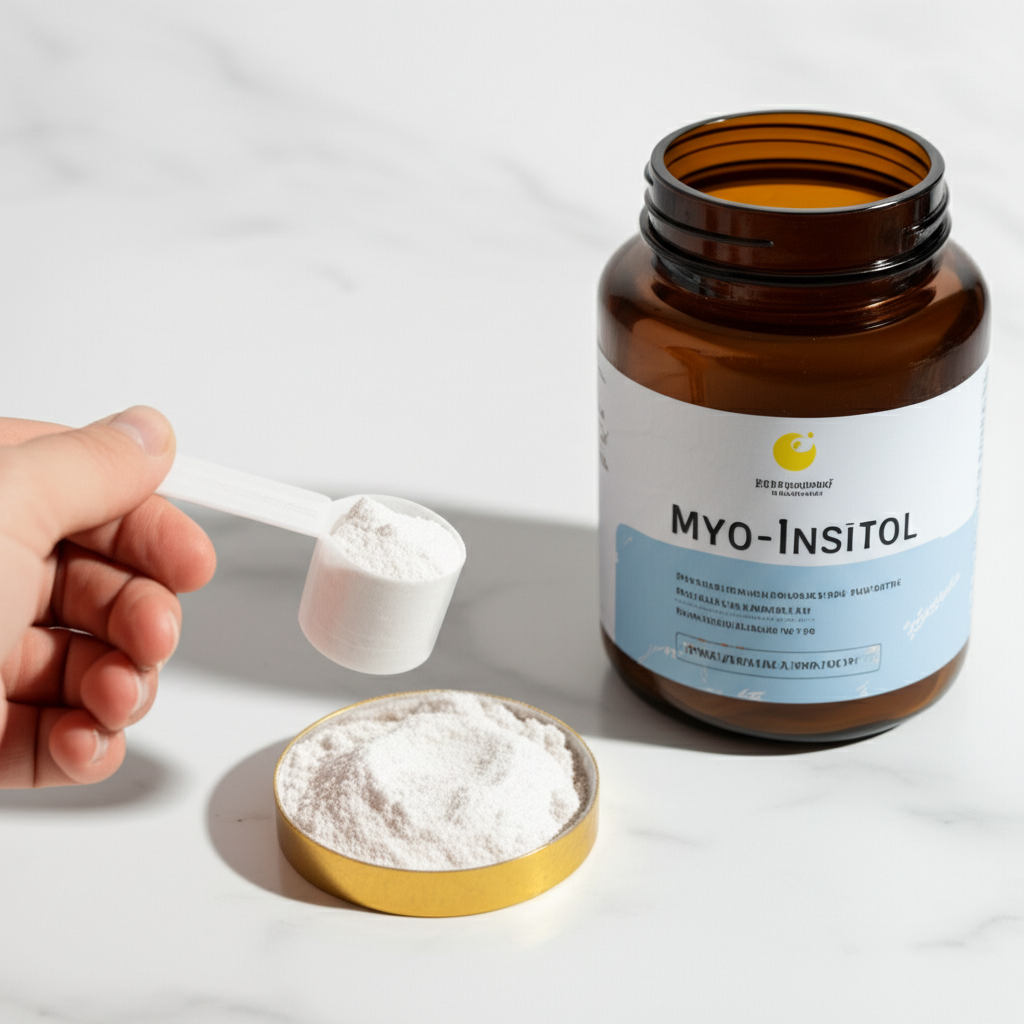
As for an Amazon option, I’ve seen people prefer powder myo-inositol because it’s easier to hit the study-level dose without swallowing 8 capsules a day. That’s a small thing. Yet it’s the kind of small thing that decides whether you’ll keep taking it.
What the research says (and a couple stats worth knowing)
PCOS is associated with insulin resistance at high rates; many estimates place it around 50–70% depending on population and diagnostic criteria (NIH review on PCOS and insulin resistance). That’s one reason insulin-targeted approaches—nutrition, strength training, sometimes metformin, and sometimes inositols—show up so often in PCOS plans.
On top of that, research from the CDC notes that insulin resistance can raise insulin levels, which can influence hormone signaling. That matters because it helps explain why insulin-focused strategies show up in PCOS care so often. Meanwhile, a 2024 survey by Statista found that 41% of U.S. supplement users reported taking supplements specifically for “women’s health” goals, showing how common self-directed approaches are (and why label-reading matters).
On top of that, according to a 2024 study by Frontiers, about 60% of people with PCOS show signs of insulin resistance, reinforcing why insulin-support strategies come up so often in real-world plans. Even so, your mileage can vary, and you shouldn’t expect a supplement to do all the heavy lifting. Ultimately, it works best when you pair it with sustainable habits.
My take: the strongest “real-life” use case is when you’re addressing insulin resistance and ovulatory irregularity at the same time. If your PCOS is primarily driven by something else, results may be muted. Either way, you’ll want to keep expectations grounded.
How I’d combine it with lifestyle (without going obsessive)
If you only add a supplement and change nothing else, you might still see something. Still, stacking small wins works better. Here’s the combo I’ve seen make the biggest difference for actual humans with jobs and stress:
- Protein at breakfast (even 25–35g helps)
- Strength training 2–3x/week (insulin sensitivity loves muscle)
- Fiber at most meals (berries, chia, beans, veggies—pick your team)
- Sleep you protect like it matters (because it does)
- Consistent dosing for at least 12 weeks before judging it
Meanwhile, if you’re tracking progress, choose just a few markers: cycle length, ovulation signs, fasting insulin/glucose (if ordered), and how you feel day-to-day. Otherwise, it becomes a second job. Plus, you’ll end up changing too many variables at once.
One small thing I like: write down your “why” on a sticky note. Seriously. “Regular cycles,” “better labs,” “trying to conceive,” whatever it’s. Motivation fades. So a visible reminder can help you stay consistent long enough to see if it works.
Quick summary before you buy
Myo inositol PCOS supplementation is typically taken at 2–4 grams per day, often split into two doses, and it’s most commonly used to support insulin sensitivity and more regular ovulation. So give it at least 8–12 weeks. Watch for mild GI side effects. Choose a product with clear dosing and transparent testing. If you’re on blood-sugar meds or trying to conceive, get clinician input.
You Might Also Like

