
Potassium Leg Cramps: Dosage, Foods, and Safety Tips That Actually Help


Potassium leg cramps can be real, but they’re not the default explanation for every charley horse. However, if your cramps show up after sweating, long walks, or a rough night of sleep, dehydration, low magnesium, or even a medication side effect might be the bigger culprit. Most adults should aim for about 2,600–3,400 mg of potassium per day from food first, then consider supplements only if a clinician says it’s appropriate.
I’ve had leg cramps that felt like my calf was trying to climb off my body. At first, I blamed it (because that’s what everyone says, right?). However, when I actually looked at my day—coffee, not much water, and a sweaty workout—it screamed “fluid and electrolyte mismatch,” not a simple potassium issue. That’s why this guide focuses on how to tell the difference and what to do safely.
If you’re the kind of person who likes a “one-and-done” habit, a basic daily multivitamin can be a nice backstop (I’ve grabbed a plain, no-fuss one from Amazon before when my diet got chaotic). Still, food and hydration usually move the needle more than any pill, especially for cramps. In other words, you’ll get more payoff from dinner and water than from chasing a quick fix.
Are potassium leg cramps really from low potassium?
Sometimes, yes. Notably, true low potassium (hypokalemia) is more likely if you’ve had vomiting/diarrhea, you’re using certain diuretics (“water pills”), or you’re not eating much for days. In those cases, cramps can show up alongside weakness, fatigue, or heart palpitations. However, plenty of everyday leg cramps happen even when potassium is normal.
Here’s how I think about it in real life:
- Low potassium is plausible if there’s recent heavy GI loss (stomach bug), restrictive eating, or diuretic use.
- Dehydration is likely if cramps hit after heat exposure, alcohol, long flights, or lots of caffeine with not enough water.
- Low magnesium is common if you’ve poor sleep, high stress, lots of processed foods, or you’re on acid reducers long-term.
- Medication side effects matter if cramps started after a new prescription or dose change.
Potassium vs dehydration vs magnesium: a quick self-check
I’m not a fan of guesswork, so I like simple checkpoints you can actually use at home. First, ask yourself what changed this week. Then, run through these clues and don’t overthink it. Finally, if the pattern still isn’t clear after a few days, consider getting labs instead of guessing.
Clues it’s more about dehydration (or sodium) than potassium
- Cramps show up after sweating or heat exposure.
- Your urine is dark yellow and you’re going hours without peeing.
- You’ve had alcohol recently (it’s dehydrating, unfortunately).
- Hydrating + a salty snack makes you feel noticeably better.
Clues it might be magnesium-related
- You also get eyelid twitching, restless sleep, or frequent headaches.
- Cramps happen at night, even on non-exercise days.
- Your diet is low in nuts, beans, greens, and whole grains.
Clues it could be potassium-related
- You’ve recently had diarrhea/vomiting or are taking a diuretic.
- You feel weak or unusually fatigued along with cramping.
- Cramps don’t improve even when hydration is clearly good.
If you want the nerdy “official” baseline: the National Academies set adequate intake at 3,400 mg/day for men and 2,600 mg/day for women. You can see those numbers summarized via the NIH fact sheet here: NIH Office of Dietary Supplements – Potassium. Plus, the FDA lists potassium’s Daily Value as 4,700 mg for labeling purposes, which is why some labels look “high” compared to the AI numbers: FDA Daily Values.
According to a 2024 CDC NHANES dietary analysis, fewer than 3% of U.S. adults meet the recommended potassium intake from foods on a typical day (intake varies by age and sex). Meanwhile, a 2023 survey by the American College of Sports Medicine found that about 45% of recreational exercisers say they “often” start workouts underhydrated. Also, research from the National Kidney Foundation reports that about 15% of U.S. adults have chronic kidney disease, which is why supplement safety can’t be an afterthought for many people.
How much potassium should you aim for (without overthinking it)?
For most healthy adults, I like a simple target: hit the adequate intake range most days through food. Specifically, that’s about 2,600–3,400 mg/day. You don’t need a spreadsheet, but you do need consistency.
Also, a reality check: in the U.S., adults average roughly 3,000 mg/day (often less for women). That means a lot of people aren’t dramatically deficient; instead, they’re just not eating potassium-rich foods regularly. The NIH summarizes intake data and trends on its potassium page: NIH Potassium (Consumer). For more context on cramps and hydration basics, you can also review guidance from Mayo Clinic (leg cramps). Finally, if you want a deeper dive into hydration physiology, ACSM’s resource library is a solid place to browse.
My practical approach looks like this:
- Pick 2 potassium foods daily (one at lunch, one at dinner).
- Pair with hydration (because it without fluids won’t feel magical).
- Track cramps for 7–10 days (quick notes in your phone).
High-potassium foods I’d try first (and how I actually use them)
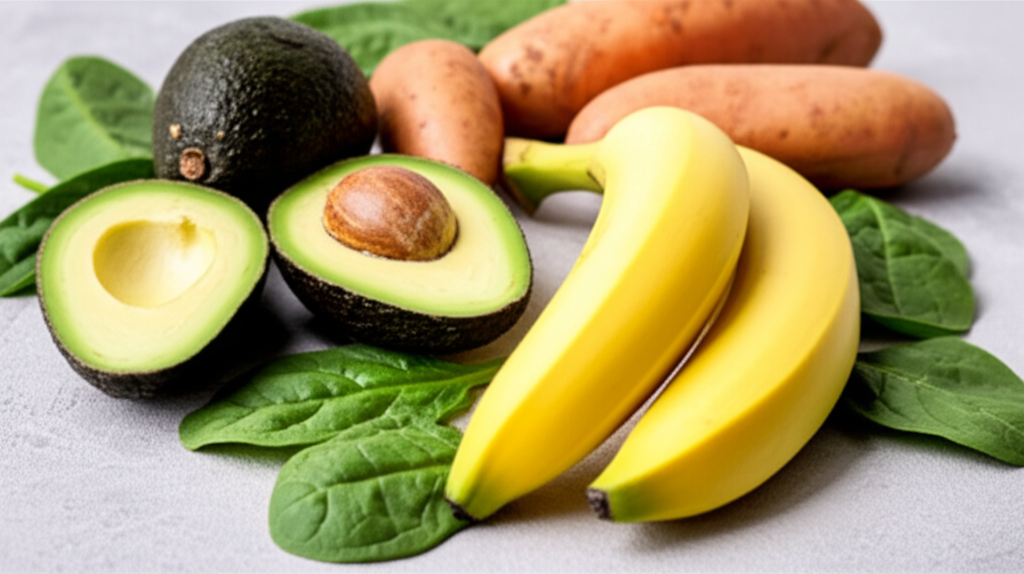
Bananas get all the fame. Honestly, they’re fine—but they’re not the only option, and they’re not always the best one. Instead, I prefer foods that also bring magnesium, fluid, or protein because cramps rarely have a single cause.
- Potatoes (with skin): One of my favorites. I’ll bake or air-fry, then add Greek yogurt and a pinch of salt.
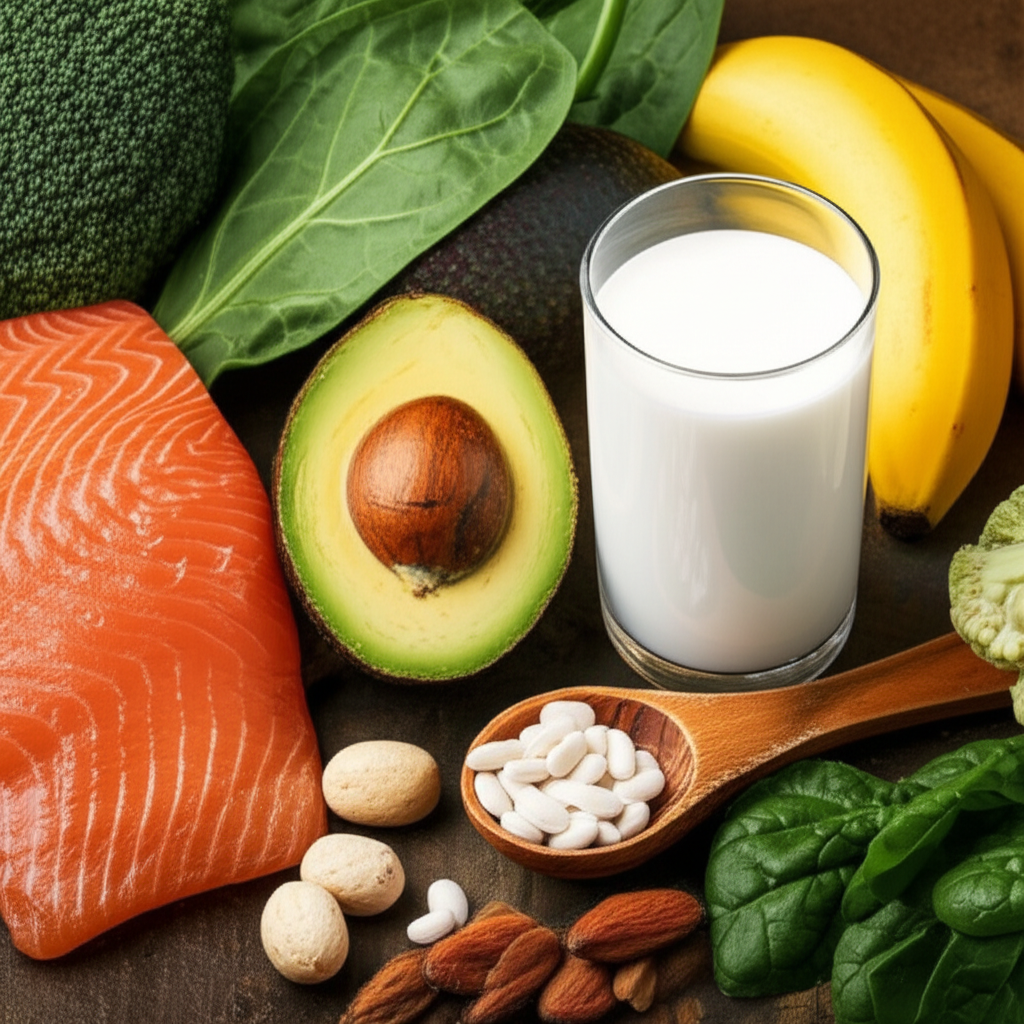
- Beans and lentils: Cheap, filling, and they support gut health too. For example, I batch-cook lentils for salads and taco bowls.
- Leafy greens (spinach, chard): Great in omelets or a quick sauté. Plus, you get magnesium.
- Tomato products (sauce, paste): Easy to add to pasta, chili, or shakshuka.
- Avocado: I’m biased—I’ll put it on everything. Also, it’s useful if you need more calories from whole foods.
- Yogurt and milk: Potassium plus calcium. In particular, they can help if cramps are nighttime-related.
- Oranges / orange juice: Useful post-workout, although I’d rather eat fruit than drink juice most days.
One more thing: if you sweat a lot, don’t ignore sodium. A low-sodium diet is necessary for some people, sure. However, plenty of active folks accidentally go too low, then wonder why their legs revolt at 2 a.m. If that’s you, you don’t need to “mega-salt” meals; you just can’t cut it to the bone. Instead, try matching salt to sweat losses in a modest, consistent way.
When are potassium supplements appropriate (and when are they a bad idea)?
Supplements sound harmless. In fact, they can be risky for the wrong person. In the U.S., most over-the-counter potassium pills are low-dose (often around 99 mg) for safety reasons. Therefore, they’re usually not strong enough to correct true hypokalemia anyway. Food and medical supervision matter more.
I’d consider discussing supplements with a clinician if:
- You’ve had confirmed low potassium on lab work.
- You’re on a medication known to lower potassium (like certain diuretics).
- you’ve ongoing GI losses (chronic diarrhea) that aren’t resolved yet.
I’d avoid self-prescribing potassium supplements if:
- you’ve kidney disease or reduced kidney function.
- You’re on meds that raise potassium (more on that below).
- You’ve had heart rhythm issues and don’t know your current labs.
Which medications can trigger cramps or affect potassium?
This is the part most people skip, then they suffer for months. Cramps can tie to meds indirectly (through electrolytes) or directly (muscle side effects). If your cramps started after a new prescription, that timing matters. Also, a quick med review can save you weeks of trial-and-error.
- Diuretics (some types): can lower potassium, which may contribute to cramps.
- ACE inhibitors / ARBs: can raise potassium, which makes supplements riskier.
- Statins: can cause muscle symptoms in some people (cramps, soreness, weakness).
- Beta agonists (some asthma meds): can shift potassium into cells temporarily.
If you’re on an ACE inhibitor or ARB, don’t panic and don’t guess. Instead, be cautious with supplements and salt substitutes that contain potassium chloride. What’s more, ask your prescriber if you should have potassium checked, especially if you also use NSAIDs often (those can affect kidneys too). For drug-specific details, you can cross-check interactions via MedlinePlus (Drug Information) and look up your exact medication name.
Safety tips if you’ve kidney issues or take ACE inhibitors/ARBs
Your kidneys regulate potassium. So, if kidney function is reduced, potassium can build up, and that can become dangerous. Similarly, ACE inhibitors and ARBs reduce potassium excretion in many people, which is helpful sometimes, but risky if you add supplements on top. If you’ve got any kidney history, you shouldn’t freestyle this. Instead, get clear guidance and stick to it.
These are my “don’t wing it” rules:
- Don’t start potassium supplements without medical guidance if you’ve any kidney disease history.
- Be careful with salt substitutes labeled “potassium salt” or “KCl.” They can add a lot fast.
- Get labs when advised: potassium and kidney function (creatinine/eGFR) are usually the key tests.
- Don’t combine multiple potassium sources blindly (supplement + electrolyte drink + salt substitute).
If you’re looking for a trustworthy overview of medication interactions and potassium risks, the NIH potassium fact sheet is a solid starting point: NIH ODS – Potassium (Health Professional). On top of that, the National Kidney Foundation explains why high potassium can be dangerous when kidney function drops. For a broader medication-safety overview, you can also reference FDA Drugs.
My no-drama plan for stopping leg cramps tonight
When a cramp hits, you want relief now, not a lecture. So, here’s what tends to work best, in order. Also, if they keep returning, use this plan as a repeatable checklist rather than a one-time fix.
- Stop and gently stretch the cramped muscle for 20–30 seconds. Don’t bounce.
- Walk it out for a minute if you can. Movement helps reset the spasm.
- Hydrate with water. Plus, if you’ve been sweating, consider an electrolyte drink or water plus a salty snack.
- Warmth (shower/heating pad) if the muscle is tight afterward.
For preventing repeats, I like a boring routine: water earlier in the day, a potassium-rich food at dinner, and a short calf stretch before bed. It’s not sexy, but it’s effective. As a simple example, I’ll do a baked potato with yogurt at dinner, then I’ll drink a full glass of water before I start my bedtime routine. Then, I’ll jot a quick note if a cramp still shows up.
When cramps are a red flag (don’t ignore these)
Most cramps are annoying, not dangerous. Still, a few signs deserve a real medical check. Sooner rather than later, go in if you’ve any of the following symptoms, because they can point to a bigger issue than a simple electrolyte gap.
- Chest pain, fainting, or heart palpitations with cramps (electrolytes can affect rhythm).
- Severe weakness, numbness, or new trouble walking.
- One-sided leg swelling, warmth, redness (rule out a blood clot).
- Cramps plus persistent vomiting/diarrhea or dehydration symptoms.
- Frequent nighttime cramps that keep worsening over weeks.
Summary: what to do about potassium leg cramps
Potassium leg cramps are possible, especially with true potassium loss from illness or certain meds. However, dehydration, magnesium gaps, and medication side effects are just as common. Aim for potassium through food (2,600–3,400 mg/day for most adults), hydrate consistently, and be cautious with supplements—particularly if you’ve kidney issues or take ACE inhibitors/ARBs. If cramps don’t improve after 7–10 days of consistent food + fluids, you’ll usually do better getting labs than guessing. Ultimately, your pattern matters more than any one “miracle” food.
[content-egg-block template=offers_list]
You Might Also Like

